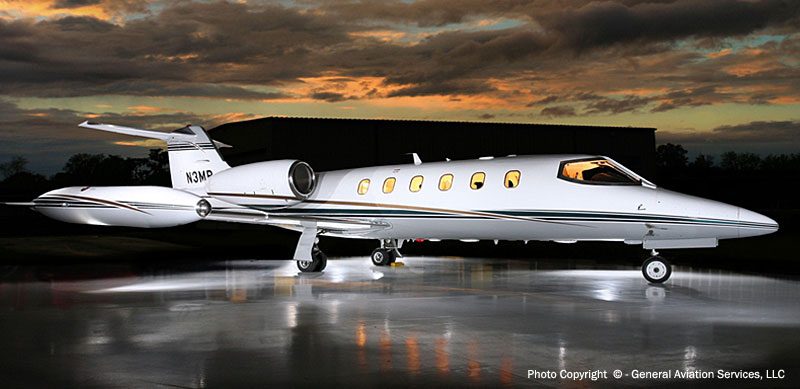
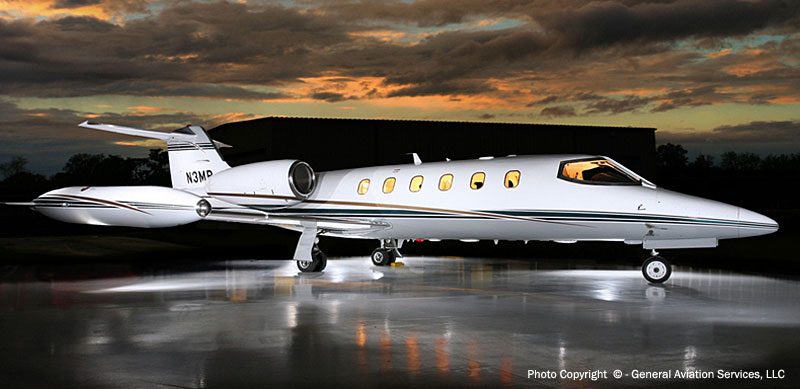
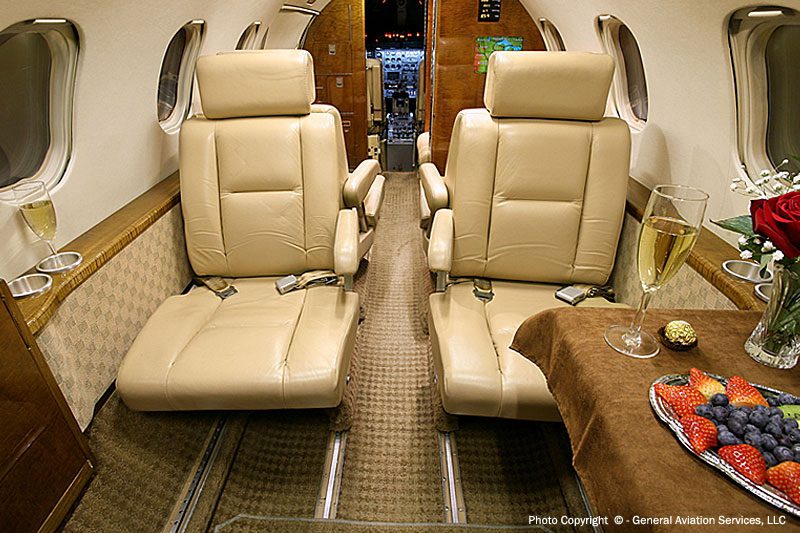
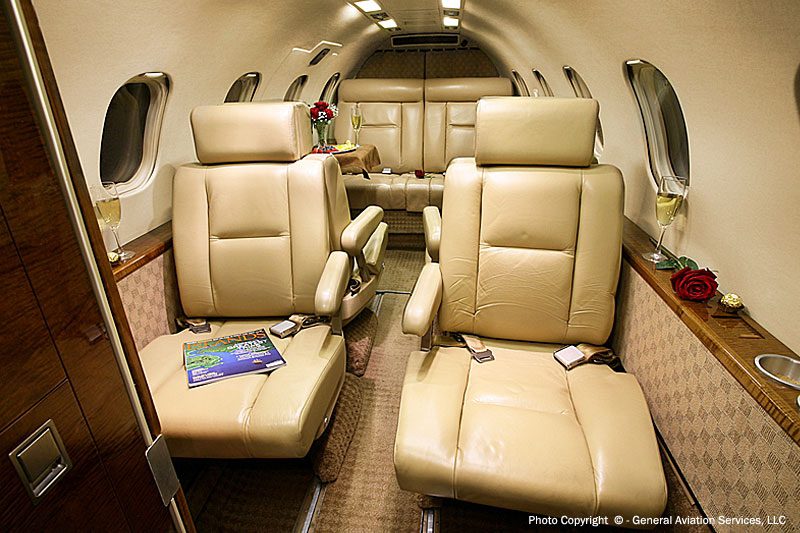
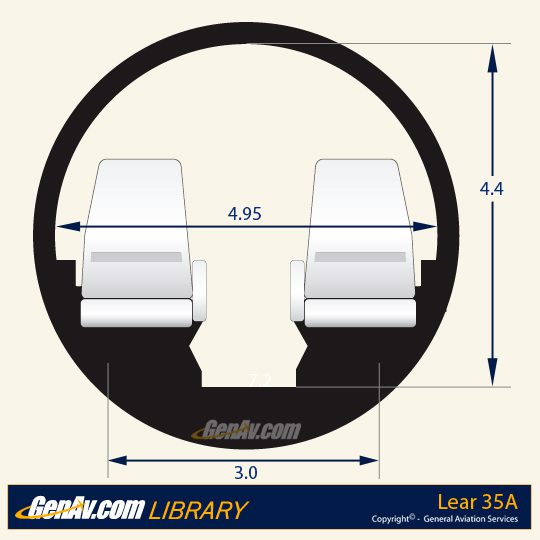
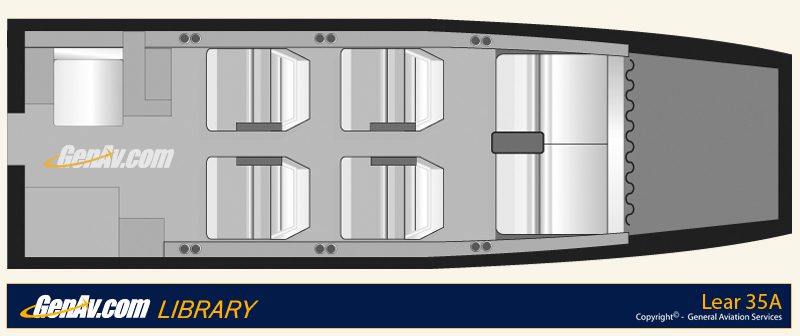
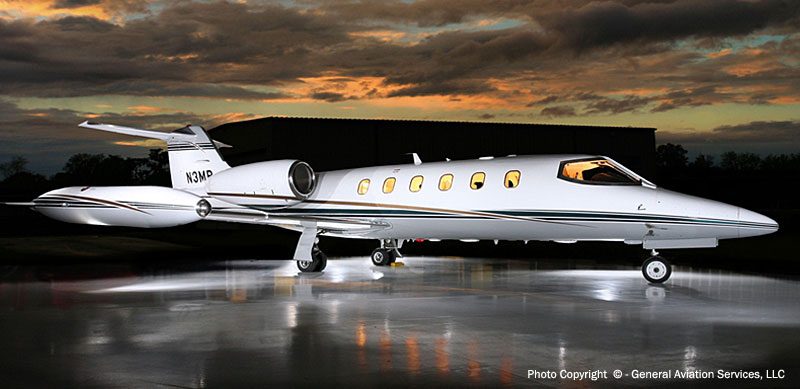
The original Model 35 was powered by two TFE731-2-2A engines and was 13 inches longer than its predecessor, the Model 25. First flight of the prototype Model 35 was on 22 August, 1973, and the aircraft was FAA certified in July, 1974. It could carry up to eight passengers. There were 64 base-model 35’s built. The Model 35A is an upgraded Model 35 with TFE731-2-2B engines and a range of 2,789 miles, with a fuel capacity of 931 US gallons (3,524 L) with refueling accomplished at ground level through each wingtip tank. It was introduced in 1976, replacing the 35. Over 600 35As were built, with a production line that ended with serial number 677, in 1993. The Learjet 35/36 is essentially a Learjet 25 airframe powered by two Honeywell TFE731-2 engines producing 3,500 pounds of thrust. It received its Supplemental Type Certificate in 1976. These are also the last models to employ the short wing with tiptanks. Seats full range for the Learjet 35 increased from the Learjet 25’s 895 nm to 1,930 nm. The Learjet 36 is a model 35 with the rear bench seat removed to make room for an auxiliary fuel tank holding 1,200 pounds of additional fuel. This extra fuel increased its range by 423 nm giving non-stop coast-to-coast capability when flown at long range cruise. This looked good on paper, but it didn’t take customers long to learn that a Learjet 35 flying at high cruise and making one refueling stop could beat the Learjet 36 from New York to Los Angeles by about 20 minutes. Only 43 were delivered, while 609 model 35’s were delivered.